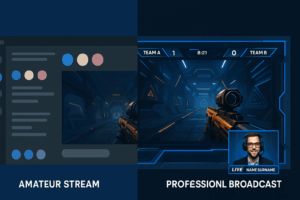
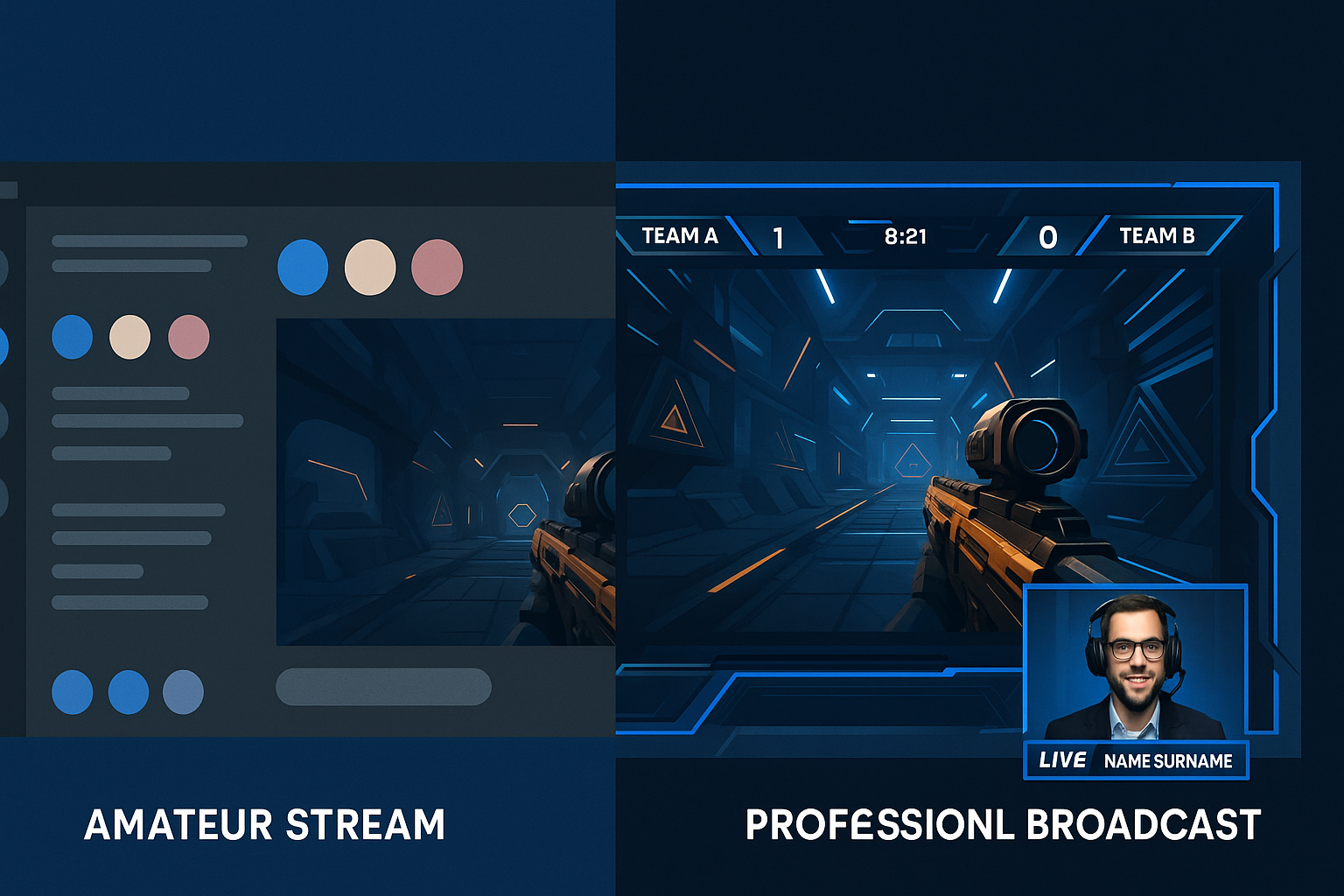
Anyone who has watched a grassroots esports tournament knows the difference between an amateur stream and a professional broadcast. One feels like a chaotic Discord call with messy screen shares, while the other feels like a live TV sporting event.
What does it take to bridge that gap?
As a technical director, I’ve had the privilege of producing major esports tournaments for broadcast on both Twitch and television. The secret isn’t just about having expensive gear; it’s about having a professional production plan.
If you’re an organizer looking to elevate your next event, here are the essential steps to transform your tournament from a simple stream into a professional broadcast.
1. It All Starts with a “Run of Show”
You would never see a professional sporting event start without a minute-by-minute schedule, and your tournament should be no different. A “Run of Show” is your production bible. It’s a detailed document that plans out every segment of your broadcast, including:
- Pre-Show: Countdown timers, intro videos, and sponsor loops.
- Host & Caster Segments: When do they appear on screen? What graphics need to be shown with them?
- Gameplay: The timing for each match.
- Commercial Breaks: Precisely when sponsor videos will be played.
- Post-Match Analysis: Displaying scores, standings, and player interviews.
This document ensures every member of the production team knows what’s happening and when, which is the foundation of a smooth broadcast.
2. Solving the “No Spectator Mode” Problem
A huge challenge in many competitive games is the lack of a dedicated “spectator mode,” making it impossible to get a clean, neutral view of the match. The amateur solution is to just screen-share one player’s perspective. The professional solution is to build a system to capture multiple perspectives.
- The Solution: Using tools like VDO.Ninja, you can pull high-quality, low-latency video feeds directly from each remote player’s computer into your central production system (OBS Studio). This allows you, as the director, to switch between players, create dynamic multi-view grids, and tell a more compelling story of the match.
3. Managing Remote Players and Casters Like a Pro
Bringing in remote players and commentators (casters) requires more than just a video call link. To achieve broadcast quality, you need to manage them from a central command center.
- Isolate Audio: Each player, caster, and host should be on a separate audio track in OBS. This gives you full control to mute, adjust levels, and prevent people from talking over each other.
- Create a “Talkback” Channel: A crucial element of professional production is a private communication line (a “talkback” channel) for the director to speak to the on-air talent without being heard by the audience. This can be managed through a separate Discord call or dedicated software, allowing you to give cues like “We’re live in 10 seconds,” or “Time for a commercial break.”
4. Integrating Sponsors and Branding Seamlessly
Sponsors are the lifeblood of many tournaments, and they need to be represented professionally. A professional broadcast integrates branding in multiple ways:
- Branded Overlays: Custom graphics that frame the gameplay and showcase sponsor logos.
- Video Ad Rolls: Playing full commercial spots during pre-planned breaks, not just randomly between matches.
- Lower Thirds: Professional graphics for introducing casters and players.
This level of integration shows sponsors that you are a professional organization, making them more likely to invest in future events.
5. The Power of a Dedicated Technical Director
This is the key that unlocks everything else. The casters shouldn’t be running the stream. The players shouldn’t be worried about their scenes. A dedicated Technical Director (or TD) is the person behind the scenes whose only job is to execute the run of show. They are the ones switching cameras, rolling commercials, managing audio, and—most importantly—solving problems when they inevitably arise.
Having a TD is the single biggest step you can take to ensure your event runs smoothly and looks professional from start to finish.
Ready to Go Pro?
Producing a high-quality esports tournament is a complex but incredibly rewarding endeavor. By focusing on a structured plan and professional execution, you can create an event that captivates viewers and attracts sponsors.
If you’re ready to produce your next tournament and want an expert to handle the technical side, book a free discovery call with me today. Let’s build a world-class broadcast together.